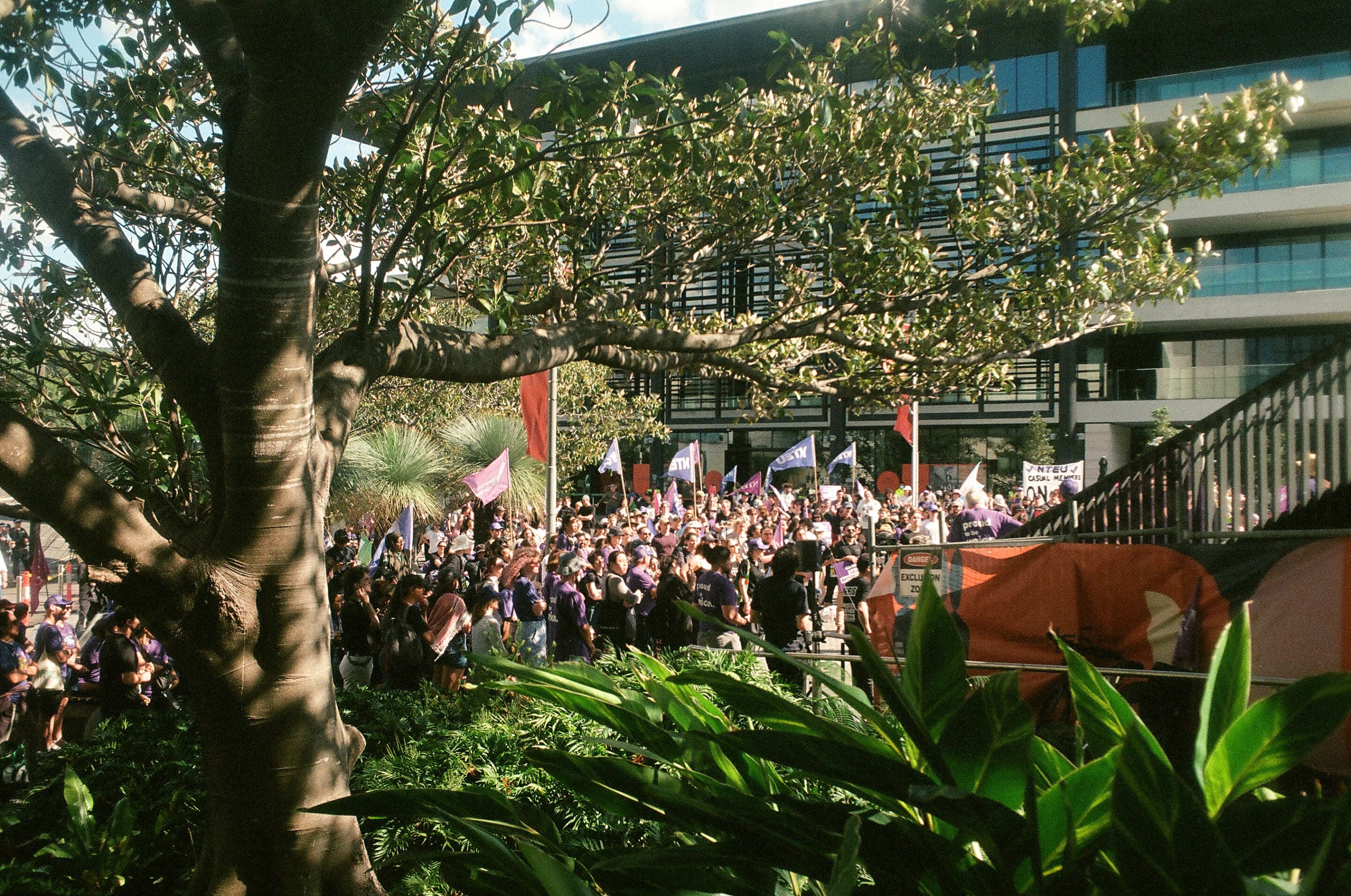

Week 8: June/July
Summary
The latest round of bargaining saw significant progress on the NTEU’s Aboriginal and Torres Strait Islander claims, with agreement reached on expanded cultural leave (from seven to fifteen days), a broader definition of kinship to improve access to Sorry Business leave, increased language allowances, and a new Cultural Allowance recognising additional cultural responsibilities. Discussions also advanced on targeted Aboriginal and Torres Strait Islander positions, while negotiations continue over stronger protections for Indigenous Cultural and Intellectual Property and enforceable employment targets.
The Union also tabled major new proposals covering disability and chronic health conditions, improved pathways from casual to ongoing employment, and gender affirmation leave. Disability claims introduce a modern social model of disability, disability passports, improved workplace adjustments and consultation, while decasualisation proposals seek stronger obligations on the University to create ongoing positions where casual work is sustained. Management agreed to include delegate rights in the Agreement, although other union rights remain under negotiation.
The bargaining also saw management table its change management proposal. Despite presenting the package as improving staff wellbeing, management’s proposal is an attack on people facing being made redundant. Management proposed weakening consultation requirements, allowing “feedback” from staff to allow Management to shorten change processes (including where redundancies are involved), and reducing union involvement in preliminary stages. The Union argues these changes would significantly weaken workplace protections and create toxic change processes. It instead plans to propose reforms that improve consultation while allowing streamlined processes with mutual consent.
Looking ahead, the Union will present new protections for staff on rolling and fixed-term contracts, alongside claims on artificial intelligence and freedom of expression. These proposals aim to strengthen job security, ensure AI is deployed transparently and with meaningful human oversight, protect staff data and intellectual property, and reinforce academic freedom and staff rights to express views without fear of disciplinary action.
Friday: Aboriginal and Torres Strait Islander claims
By Possum (Cheryl Swinton) and Tracey-Anne Cameron
The second day of bargaining around the NTEU’s Aboriginal and Torres Strait Islander claims saw the parties return to the table to consider Management’s response to the claims put forward in detail from the Union about six weeks ago.
While it would have been nice to conclude this aspect of bargaining for NAIDOC week, the parties have been productive and reached agreement on a range of important matters.
These include, in no particular order:
- The introduction of a clear definition of Aboriginal and Torres Strait Islander kinship; this definition is important as it allows clear access to sorry business leave for Aboriginal and Torres Strait Islander staff in a way that recognises the extended set of relationships and cultural expectations that many Aboriginal and Torres Strait Islander people have.
- An expansion of cultural leave for staff from seven to fifteen days per year.
- A significant increase in the annual Aboriginal and Torres Strait Islander language allowance currently in the Agreement.
- The introduction of a new Cultural Allowance in the recognition of the additional skills required to perform the additional cultural duties undertaken by Aboriginal and Torres Strait Islander people on campus and off campus on behalf of the University.
Proposals that Management advanced in response to our draft clauses that we would like to see implemented are:
- Some formalisation of the current practices of the First Nations Joint Consultative Committee, and engaging the Committee to actively work on cultural safety provisions. We will be making some suggestions here to add appropriate access to culturally-appropriate complaints processes.
- The introduction of an Aboriginal and Torres Strait Islander Development Fund, similar to that of the Professional Staff Development Fund, but accessible by all Aboriginal and Torres Strait Islander Development workers which sits well with our training claim.
Bargaining made progress on clauses that identify that some roles in the University – particularly those where Aboriginal and Torres Strait Islander cultural knowledge is key to the role and/or where specific cohorts of Aboriginal and Torres Strait Islander students are involved – should be preserved for Aboriginal and Torres Strait Islander staff. We may be able to find an agreed position to promote targeted hiring roles of this type.
The two areas where further work is needed and active bargaining will resume on are:
- Clauses around the protection of Aboriginal and Torres Strait Islander cultural and intellectual property, where management’s counter proposal needs considerable improvement to take it beyond what is already been developed at the University of Sydney (the Protocols document).
- Employment targets. Members will recall the 2025 “VCs Hit Your Targets” Campaign around population parity for Aboriginal and Torres Strait Islander higher education workers. Management does appear to be willing to put an enforceable clause about staffing numbers, but the specific target is where we will continue to push management. A productive debate was held at the table over the place to put the targets and means to develop it, but this will be the key matter to resolve at our next meeting.
Overall, our non-Aboriginal and Torres Strait Islander colleagues in bargaining have been expressing envy over the progress made on these matters.
Tuesday and Wednesday Bargaining
On Tuesday the NTEU presented some major clauses in support of our claims.
First was our disability and chronic health condition clauses. The Union had presented our ideas as a discussion paper rather than clauses in the first instance. The reason for this was that the Union’s proposals represent a major reform of the Agreement to considerably modernise it in line with our contemporary understanding of disability and chronic health conditions as conditions that may have physical aspects, but that the disabling aspect of these is often the result of social and environmental factors that need to be overcome.
This discussion paper had received genuine interest from Management at its introduction, and so the Union undertook the task to develop the detailed clauses to give the ideas life, and Jen and Laura walked through them at the table. Key elements of the clauses include:
- Introducing definitions for both disability and chronic health conditions.
- Making clear the focus on the social model of lived experience of disability and chronic health.
These “foundational” clauses are then given impact in a range of other elements of the Agreement:
- Our proposed “disability passport” system that allows for staff to have a clear statement of needed accommodations and adjustments for staff, without the need to reiterate and continually disclose underlying disability and/or chronic health conditions.
- Requirements for local implementations of the Disability and Inclusion Action Plan.
- Improved training provisions and consultation requirements.
- Improved accessibility, provisions for flexibility for staff with disability, personal leave provision, and workload provisions.
Further, the Union wants to see changes to the use of Independent Medical Examiners (IME) to prioritise reports from a staff member’s own doctors over IMEs who will never understand a person’s health issue in a short one-off meeting, as well as a claim to separate out “routine” IME requirements from those associated with medical separations.
Second, the Union presented our proposals to improve the existing decasualisation provisions of the Agreement. Some of these proposals focus on academic casual staff, learning from the limitations of the existing 20% decasualisation clause that the Union is disputing Management over in the Fair Work Commission. These improvements would see the current provisions made more enforceable and based on more accurate assessments of the casualisation rate. The Union also proposes that decasualised positions should be 50% in balanced Teaching and research roles and there be an internal target for new roles of 50% to long term casuals. Management expressed contradictory views on their willingness to consider our claims without a commitment to accepting their new categories of employment as a whole. The Union indicated it would make a response to that proposal, but had communicated our members strong dissatisfaction with their proposals.
This set of proposals also includes a clause looking to require management to create ongoing roles in work areas where there is sustained and unnecessary levels of causal employment. Further, for staff using their conversion rights, the Union would like clearer evidence from managers where these applications are rejected.
JL ran management through our clauses to improve Gender Affirmation – making the leave an annual provision in recognition that Affirmation can be something that is not confined to one year, as well as expanding access to this leave to all staff. The parties discussed the question of manager required training on gender diversity and affirmation , and will continue to discuss the wording of this proposal as there were questions from Management about the automatic trigger for training. The Union identified that there are cases where staff will need managers to be better informed about the gender identity of their staff and their respective needs.
The Union responded in a genuine way to Management’s position on our Union rights and resources package, offering a compromise on some of the proposals originally put forward, while reiterating the importance of our communications and time-release proposals. Management agreed to include Delegate Rights from the Act into the Agreement, which is an important outcome in securing those rights in the Fair Work Act against future anti-union governments. We expect Management to come back on the unresolved matters with some possible compromise positions, and the parties agreed to punt the more difficult question of email access to all staff to a later point in negotiations.
The Tone Changes: Management’s Managing Change Proposal
This needs a heading of its own.
If members read the email on Change Management from the Provost and Vice President last week you would have heard about a “package of proposals … to reduce the impact of workplace change on staff wellbeing and support desirable cultural shifts through changes to the Enterprise Agreement”.
This exercise in corporate wellness washing was a surprise to members of the Bargaining Team as the team had been clear to Management just one hour earlier that the proposal was never going to progress in its current form, with the parties (including management) agreeing that the Union would put forward an acceptable approach to reform change management processes.
This frankness is the continuation of over a year of clear correspondence with Management about terrible change processes at the University of Sydney. Since the “Change Summit” between Management and the Unions last year, many managers have not improved their practices and the Branch leadership and Industrial Officer have written to Management on many about:
- Failures to inform the Unions – as required in the Agreement – about initiation of change;
- Managers who do not respond to routine inquiries about change processes underway;
- Managers initiating change and then going on leave;
- Management including “surprise” redundancies into the Finial Change Proposal, denying staff any right of consultation;
- Failure to undertake change management processes when required;
- Change Management proposals with basic errors in them;
- Sham consultation, and;
- Misinforming staff about their legal rights.
Thus, management’s “package” to strip workplace protections and job security from the Agreement indicates that, rather than fix these problems, management proposes to lower staff rights in the Agreement allowing them to continue these practices with impunity. Specifically:
- Management’s proposal would reduce the value of the preliminary change stage, and exclude the union from involvement in this stage.
- Management want to exclude work areas with fewer than six staff from change management projections, reducing this to a simple “will consult” provision.
- The optional second Revised Change Proposal is removed.
- And most egregiously, they propose to allow a majority of staff to agree to shortcutting change processes even where their colleagues are being sacked – a recipe for a toxic process of change where “mapped” staff sacrifice their colleagues. The polar opposite of the Provost and Vice-Presidents “wellness” rhetoric.
There is a sweetener in the “package” – a staff member who survives their position being made redundant and remains in the same work area will not have to go through the ringer again in a two-year window. Our assessment is that while beneficial, this protection does not compare to the managerial fiat being proposed for change management in the other proposed clauses.
As promised at the table, the Union will put together a measured response to Management as we are not insensitive to the need to improve change processes – the Union routinely runs information sessions for staff about change, redeployment, and redundancy rights; we directly engage with more staff affected by change than any other group in the University.
Our proposal will:
- Improve the Preliminary stage to encourage more genuine co-design and organic change outcomes;
- Provide for “short track” change processes where there are no redundancies, and;
- Facilitate the adjustment of change processes away from the rigid set up steps, where all parties agree to that change.
The Next Session of Bargaining: What’s Coming Up
At the next session of Bargaining the NTEU will put its last substantive clauses on the table – new protections for precariously-employed staff who have laboured under multiple contracts.
On this clause, Members will be aware that the Branch has been placing more emphasis on staff subject to “rolling contracts.” This form of precarity is particularly acute at the University of Sydney as an intensive research institution, and one that has success in winning external funding for large projects.
The clauses to be put to the table will:
- Update the Agreement in line with the Closing Loopholes legislation to ensure the Agreement is aligned with those legislative limits on rolling contracts.
- Adjust the notice of end of fixed term contract increased to 5 weeks for all staff, giving staff more notice about plans not to extend contracts and plan accordingly.
- Where the University is recurrently required to offer fixed term staff further work, our clauses require that the work, where possible, should be offered as ongoing, where not possible then at the staff member should have the choice of using a funding contingent employment contract.
- Introduce a three-month redeployment period for both funding contingent staff and fixed-term staff on second or subsequent contract with more 2 years of service.
In addition, we expect Management to respond to two of our significant claims presented earlier in bargaining: AI and Freedom of Expression.
The AI claim we made brings the Agreement up to date as the current Agreement has no mention of this technology. The Union wants to:
- Establish that AI should be used in the public interest, enhance and not replace work, and ensure AI systems at the University are explainable, transparent, and their decisions are contestable. We cannot accept “the computer says no” responses to decisions made by AI systems, particularly with regards to employment decisions where the human must remain in the loop.
- Further, we want staff in control of their personal data and be able to opt out to training data collection, as well as retaining moral rights to their IP.
- AI systems should be introduced following consultation with staff.
Our Freedom of Expression claim:
- Reiterates and highlights the key principles of freedom of expression, thought, and conscience at the University of Sydney as a core value of the higher education sector and its role in society.
- Clarifies the rights of staff to use university spaces in reasonable ways.
- Makes clear that the exercise of these rights cannot be subject to disciplinary action by Management.